Rethinking Autism: Implications of Sensory and Movement Differences for Understanding and Support
📄 Original study📌 Appears in:
Plain English Summary
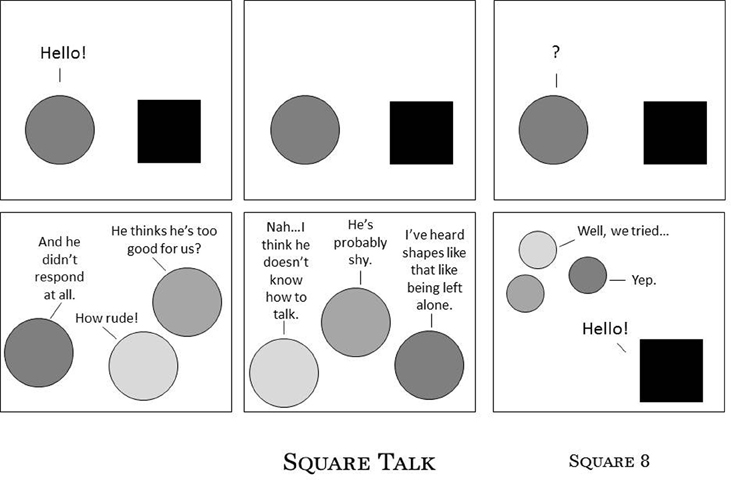
This paper challenges how we think about autism. The traditional view says autistic people have deficits in social skills and communication — that they choose not to engage. Donnellan and colleagues argue that what looks like social withdrawal is often rooted in neurological differences in processing sensation and movement. Imagine wanting to wave hello but your body will not cooperate. One striking finding: motor skill at age 2 is the strongest predictor of losing an autism diagnosis by age 4, underscoring how central movement is to the whole picture. The paper urges a shift from controlling autistic behavior to accommodating sensory and movement differences instead.
Abstract
For decades autism has been defined as a triad of deficits in social interaction, communication, and imaginative play. Though there is now broad acknowledgment of the neurological basis of autism, there is little attention paid to the contribution of such neurological differences to a person's development and functioning. Communication, relationship, and participation require neurological systems to coordinate and synchronize the organization and regulation of sensory information and movement. Developmental differences in these abilities are likely to result in differences in the way a person behaves and expresses intention and meaning. The present paper shares our emerging awareness that people may struggle with difficulties that are not immediately evident to an outsider. This paper explores the symptoms of sensory and movement differences and the possible implications for autistic people. It provides a review of the history and literature that describes the neurological basis for many of the socalled behavioral differences that people experience. The paper emphasizes the importance of our acknowledgment that a social interpretation of differences in behavior, relationship, and communication can lead us far away from the lived experience of individuals with the autism label and those who support them. We suggest alternative ways to address the challenges faced by people with autism.
Links
Related Papers
Same Research Program
- Harnessing Repetitive Behaviours to Engage Attention and Learning in a Novel Therapy for Autism: An Exploratory Analysis — Chen, Grace Megumi (2012)
- Being versus Appearing Socially Uninterested: Challenging Assumptions about Social Motivation in Autism — Jaswal, Vikram K (2019)
- Eye-Tracking Reveals Agency in Assisted Autistic Communication — Jaswal, Vikram K (2020)
- Rethinking Communication and Consciousness: Lessons from The Telepathy Tapes Podcast — Weiler, Marina (2025)
Companion
📋 Cite this paper
Donnellan, Anne M, Hill, David A, Leary, Martha R (2013). Rethinking Autism: Implications of Sensory and Movement Differences for Understanding and Support. Frontiers in Integrative Neuroscience. https://doi.org/10.3389/fnint.2012.00124
@article{donnellan_2013_rethinking,
  title = {Rethinking Autism: Implications of Sensory and Movement Differences for Understanding and Support},
  author = {Donnellan, Anne M and Hill, David A and Leary, Martha R},
  year = {2013},
  journal = {Frontiers in Integrative Neuroscience},
  doi = {10.3389/fnint.2012.00124},
}